
I stuck out my hand, half unsure if the pickup truck would stop. It did. Two older men waved me into the back, smiled, and drove me down the coast, refusing any payment.
This was El Salvador, a country that, just a few years ago, I might not have felt safe enough to visit.
Welcome to El Salvador, a small country with big dreams. Home to over 230 volcanoes, mostly inactive, it’s a country that has seen multiple presidents and little change, until recent years. From the murder capital of the world to one of the safest countries in the Americas, many locals credit President Nayib Bukele. It wasn’t until he came into power and put over 80,000 people in prison that people began to live free and normal lives again. Gang members used to extort businesses for up to 70% of their wages, meaning a fruit vendor, for example, could barely survive.


I heard firsthand what life was like before 2019, and it wasn’t pretty. On a walking tour in Santa Ana, our guide Hector told us about being pressured to join a gang as a teenager. Not wanting to kill or risk being killed, he packed a bag and left for Guatemala. He returned years later, once the country was safe again. His “friends” were gone, and his parents have since returned as well.
While Bukele has made the country significantly safer, other issues remain. Hector explained that a State of Emergency, originally meant to last a few days, has continued for years. Police have free rein, and many constitutional rights, including due process, are effectively suspended. I spoke to locals about rising costs and low wages. How do they manage? If you’re lucky, a family member abroad helps you survive.
Roman, a Salvadoran who had lived in California for many years, returned to Nahuizalco, along the famous Ruta de las Flores, to live a quieter, more meaningful life. I had stopped to explore and grab a smoothie when he noticed my gringo appearance and offered to take me to La Golondrinera, a hidden waterfall few tourists visit. I had heard of it but didn’t think I had time to get there on my own. Roman hired a local driver, and off we went.
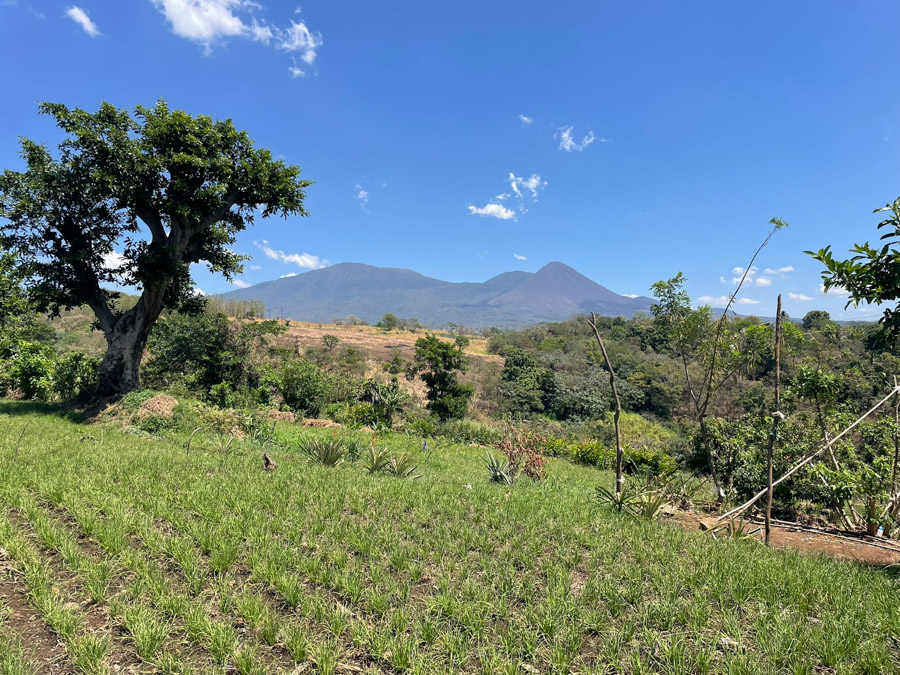
We walked along a dirt path that opened into fields of spring onions and flowers. The bucolic setting stretched toward distant mountains. As we walked, Roman shared his story. His mother left for the U.S., leaving his sister behind when she was 14 and he was 10. Years later, she could afford to bring only one child; his sister left, and he stayed behind. Eventually, he made the journey himself, traveling overland with a coyote.
In Los Angeles, he worked his way up from cleaning bathrooms to managing a furniture store and eventually started his own white-glove delivery business. He had the car, the clothes, the lifestyle, but it never felt like him.
He always dreamed of returning home, and last year, he finally did. He built a small shopping center in Nahuizalco, employs around 20 people, and organizes community cleanups along the river. He wants to give back and lift up his community.
As the trail grew shadier, he told me this was a sacred spot where his ancestors once prayed. Then the path dropped into a canyon. My mouth hung open. Steep brown walls rose around us, streaked with lush green plants. No one else was around. We stepped into the cool stream and soon reached the cascading waterfall, where we swam as the heat climbed into the upper 80s.
On the way back, he picked two mangoes for us to eat. We bit off the skin and enjoyed the sweet fruit. He stopped at a woman’s home to buy freshly cut mango slices doused with lime. Where the trail met the road, three kids were trying to catch frogs with a plastic container. A pickup truck arrived, and we climbed in the back. Roman chatted with another man about rising property prices. Land that once sold for under $100,000 now goes for $350,000. With the gangs gone, Salvadorans abroad are returning and investing.
Back in town, Roman helped me find the local bus, and we hugged goodbye. He said next time I return, he’d take me to another waterfall, and a free Airbnb awaits me.
It wasn’t the last time I was greeted by friendly, helpful locals.


On the coast, I tried hitchhiking for the first time. In El Zonte, I needed to get to Playa El Sunzal. A local woman told me buses ran infrequently in the evening. I saw a pickup with two older men in the back, raised my hand, and they stopped. I tapped the window at my stop, and they waved off my offer to pay. It dawned on me: here, people help others, even if it slows them down.
In Suchitoto, after a boat ride on Lake Suchitlán in the midday heat, I didn’t have it in me to walk back up the steep hill. After waiting for a bus, I noticed a man about to ride off on his scooter. I asked if he was heading up. He wasn’t, but he turned around to take me anyway.
Later, after visiting Cascada Los Tercios, I didn’t want to walk back alone, uneasy about stray dogs after a scary incident in Ecuador. I stuck out my hand. The next car stopped immediately. The driver wasn’t headed into town but insisted on taking me all the way. Along the way, he told me about his three kids, several grandkids, and that he is retired, earning a $500 monthly pension, with help from his son in Washington state.
On my final day, I visited the historic center and had lunch atop BINAES, La Biblioteca Nacional de El Salvador, built in 2023 for $54 million and funded by China, open 24/7. The glitzy exterior flashes lights at night. Opposite it stands the Metropolitan Cathedral, built in 1888, simpler yet grand, highlighting the country’s contrast between old and new.
Bukele boasts ambitious plans: building or renovating schools, reviving the nearly extinct Nawat language, and lowering the cost of living. Many locals say they have yet to see these plans materialize.
To his credit, he has made the country safe, and the majority still support him. In Suchitoto, all cables were placed underground and the main square beautified, crediting him and the local mayor. His image is everywhere. On my last day, a man handed out balloon toys printed with Bukele’s face and the words El país más seguro del mundo, the safest country in the world. Bukele has called himself “the coolest dictator in the world.”
On my final night, I found myself reflecting on my two weeks in El Salvador. I missed hearing live street music, and then a street performer appeared, playing electric guitar to a crowd of locals. Shy at first, I ended up joining people dancing. Local women welcomed me warmly, and it felt like the perfect ending to my time in the country.


I thought about my time in El Salvador. Two incredible weeks filled with nature, adventure, friendly locals, and delicious pupusas. Popular spots like Santa Ana, El Tunco, and the Seven Waterfalls hike attract backpackers, while places like Suchitoto and Salto de Malacatiupán remain quieter and peaceful.
Go visit this gem of a country. Get off the beaten path, chat with locals, and support the women working hard in pupuserías, loading each one with crunchy slaw and tomato sauce. Climb volcanoes, camp atop an inactive one, ride the rainbow slide at the Picnic Steak House, explore Juayúa’s weekend food festival, and take a surf class on the coast.
Adventure, and something deeper, awaits.
Leave a Reply